
International Media Center (IMC) | News Coverage & Analysis
Shenzhen, China | November 19, 2026
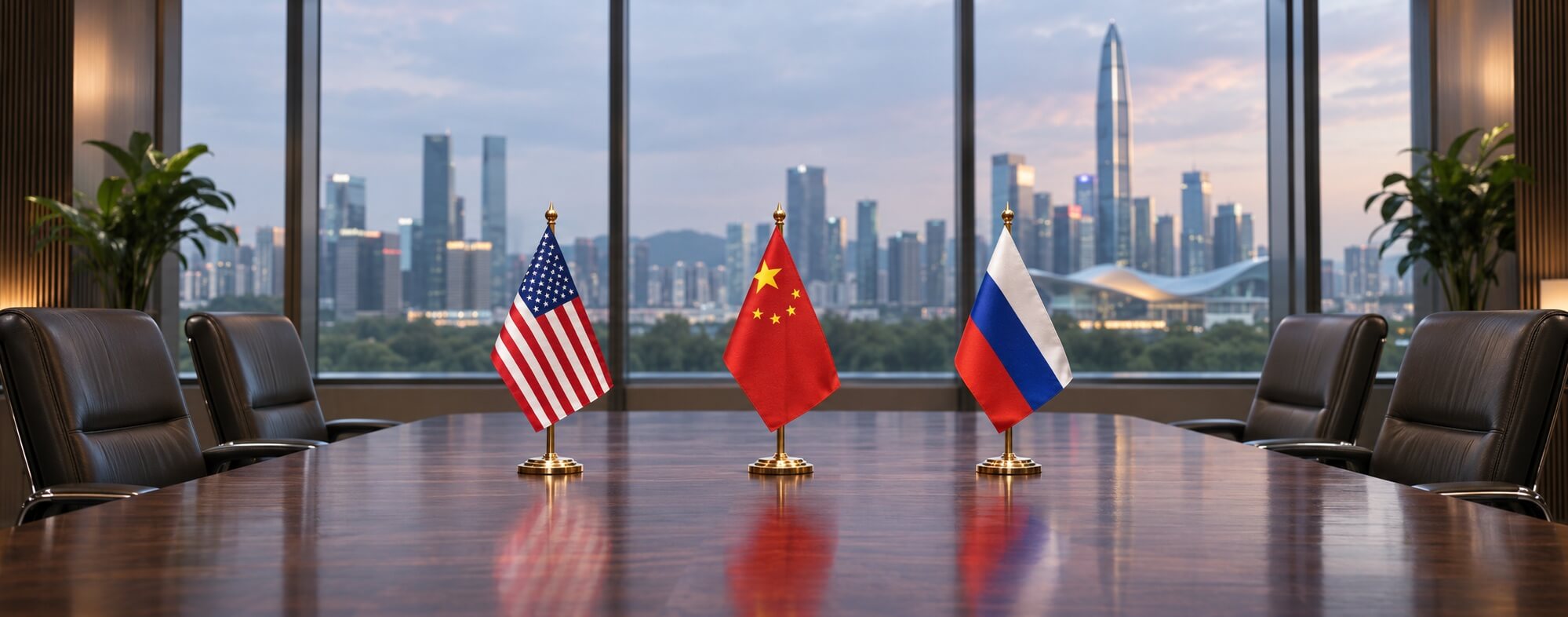
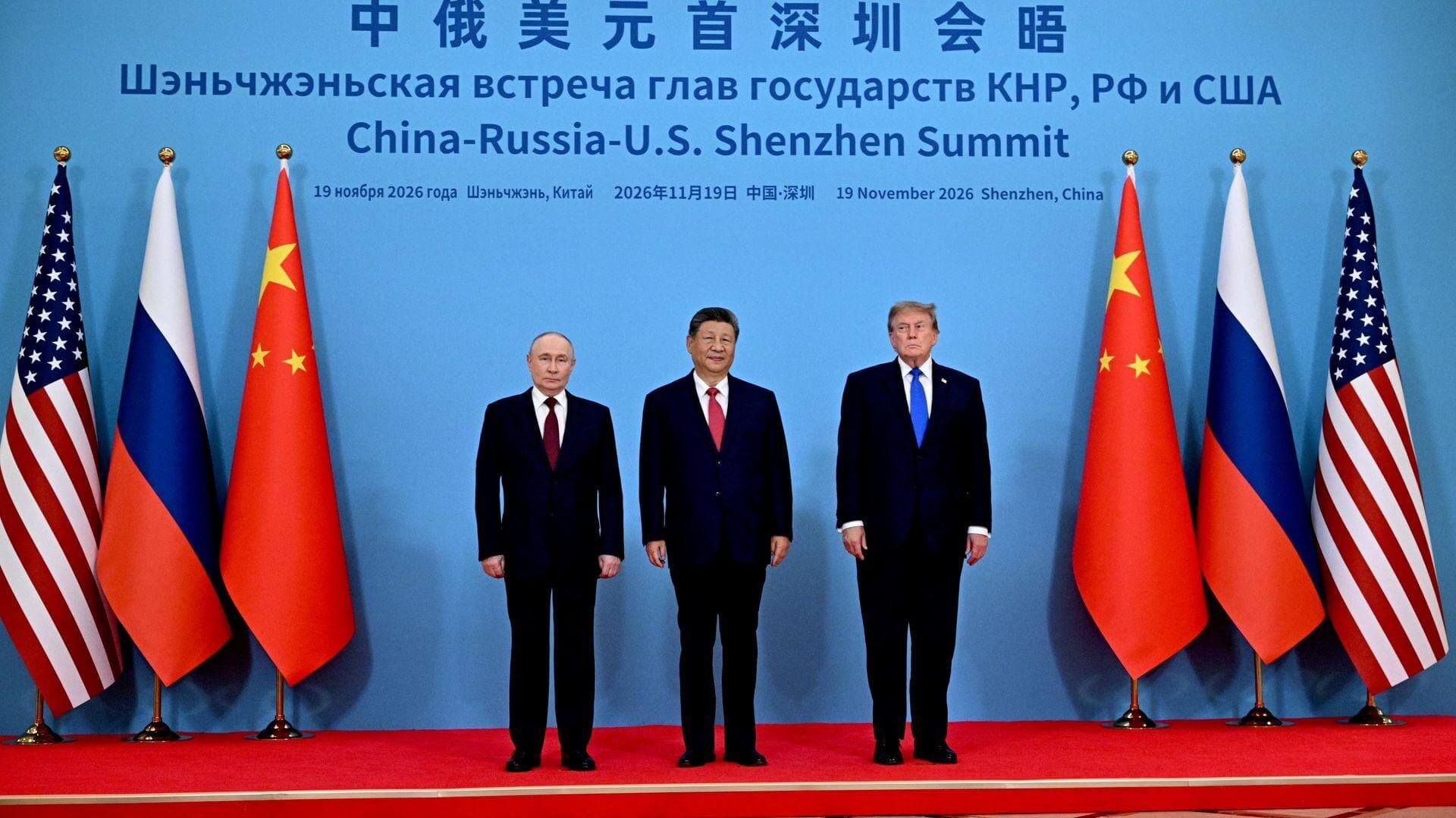
In an unprecedented diplomatic development, US President Donald Trump, Russian President Vladimir Putin, and Chinese President Xi Jinping met today, Thursday, in the Chinese city of Shenzhen, on the sidelines of the 33rd APEC Economic Leaders’ Meeting. The gathering marked the first direct trilateral meeting between the leaders of the three countries.
The meeting comes at a time of growing strategic competition, multiple international conflicts, and mounting challenges related to nuclear security, energy, and global trade. These circumstances give the summit significance beyond its diplomatic protocol, highlighting its potential implications for the future of relations among the world’s major powers.
Joint Declaration Outlines Four Key Areas of Understanding
The trilateral talks resulted in a joint declaration outlining four main areas reflecting the fields in which the three countries expressed a willingness to coordinate.
The key areas include:
1. Reforming the United Nations System
The three countries reaffirmed their commitment to supporting United Nations reform, emphasizing the importance of strengthening the organization’s ability to respond to international challenges and fulfill its responsibilities in maintaining international peace and security.
2. Energy Security and Supply Stability
The declaration included a commitment to increasing the production and supply of refined petroleum products, while emphasizing the importance of stable energy flows and maintaining uninterrupted supplies to global markets.
3. International Jurisdiction and the Immunity of Officials
The declaration highlighted the importance of the principle of state consent and respect for the immunity of state officials, calling on the International Criminal Court and similar bodies to refrain from misusing their judicial jurisdiction.
This provision carries particular political and legal significance amid ongoing disagreements among several international powers over the scope and limits of the International Criminal Court’s jurisdiction.
4. Reducing Nuclear Risks and Preventing Proliferation
The leaders reaffirmed that a nuclear war cannot be won and must never be fought. They also agreed to engage in dialogue aimed at reducing nuclear risks and preventing the proliferation of nuclear weapons.
This issue represents one of the most significant areas of concern for the US president, who has called for cooperation among the three countries to reduce nuclear arsenals and minimize the risk of their use.
Ukraine and Iran: Issues Shaping the Broader Diplomatic Landscape
Despite the significance of the Russia-Ukraine war and tensions surrounding Iran, the joint declaration did not include an agreement or settlement addressing either issue.
The war in Ukraine featured in bilateral discussions between Trump and Putin, while Trump’s meetings with his Russian and Chinese counterparts addressed a range of regional and international issues, including Iran and the security of energy supplies.
These developments highlight the limits of the understandings that major powers can reach, particularly when their direct national interests conflict with the nature of the crises under discussion.
They also raise questions about whether dialogue between Washington, Moscow, and Beijing can evolve from strategic coordination into tangible progress toward resolving international conflicts.
The Middle East and Energy Security: Strategic Interests Beyond Geography
The Middle East remains strategically important in the calculations of all three powers, not only because of regional conflicts but also because of its direct connection to global energy markets, maritime routes, and international supply chains.
From this perspective, any understanding concerning the stability of energy supplies or the prevention of regional escalation could have implications extending far beyond the region, affecting the global economy as a whole.
However, the absence of detailed treatment of regional crises in the joint declaration leaves important questions unanswered regarding the role the three powers might play in containing tensions and the extent to which regional countries themselves will participate in shaping future arrangements concerning their security and stability.
The International Order: Strategic Cooperation or Management of Rivalries?
The summit’s significance lies in bringing together three countries with considerable political, military, and economic influence, as well as the world’s three largest nuclear powers in terms of their respective arsenals.
Nevertheless, bringing these powers together does not necessarily indicate agreement on a unified vision of the international order. Significant differences remain over European security, the strategic balance in the Indo-Pacific region, trade, technology, and geopolitical influence.
Furthermore, agreement on general principles alone is insufficient to produce meaningful change without clear implementation mechanisms, sustained understandings, and commitments that can be measured and monitored.
Accordingly, the significance of the Shenzhen Summit lies not only in the contents of its joint declaration but also in the three parties’ ability to translate their announced understandings into sustainable avenues of cooperation.
IMC Analysis: Beyond the Shenzhen Meeting
The International Media Center considers the trilateral meeting an important development in international relations, not because it has resolved the deep disagreements among the major powers or provided immediate solutions to ongoing conflicts, but because it has established a direct framework for dialogue among three countries with far-reaching influence over global security, politics, and economic affairs.
The four areas outlined in the joint declaration reveal overlapping interests in international institutional reform, energy security, and the reduction of nuclear risks. At the same time, they highlight substantial differences over issues requiring more sensitive political and legal positions.
It is also essential that understandings among major powers do not become a framework for determining the future of international crises without the participation of the countries and communities directly concerned.
Global stability cannot rest solely on balancing the interests of influential powers. It also requires respect for national sovereignty, stronger international institutions, and the meaningful involvement of parties directly affected by conflicts in shaping solutions.
The Shenzhen Summit opens a new window for dialogue among Washington, Moscow, and Beijing. However, the real test will lie in the ability of these powers to move beyond declared understandings and translate them into practical measures that help reduce conflicts and safeguard international peace and stability.
International Media Center (IMC)
Prepared and Edited by: Editorial Board – International Media Center
News coverage and analytical review based on published statements and international reports concerning the trilateral meeting.
Sources: